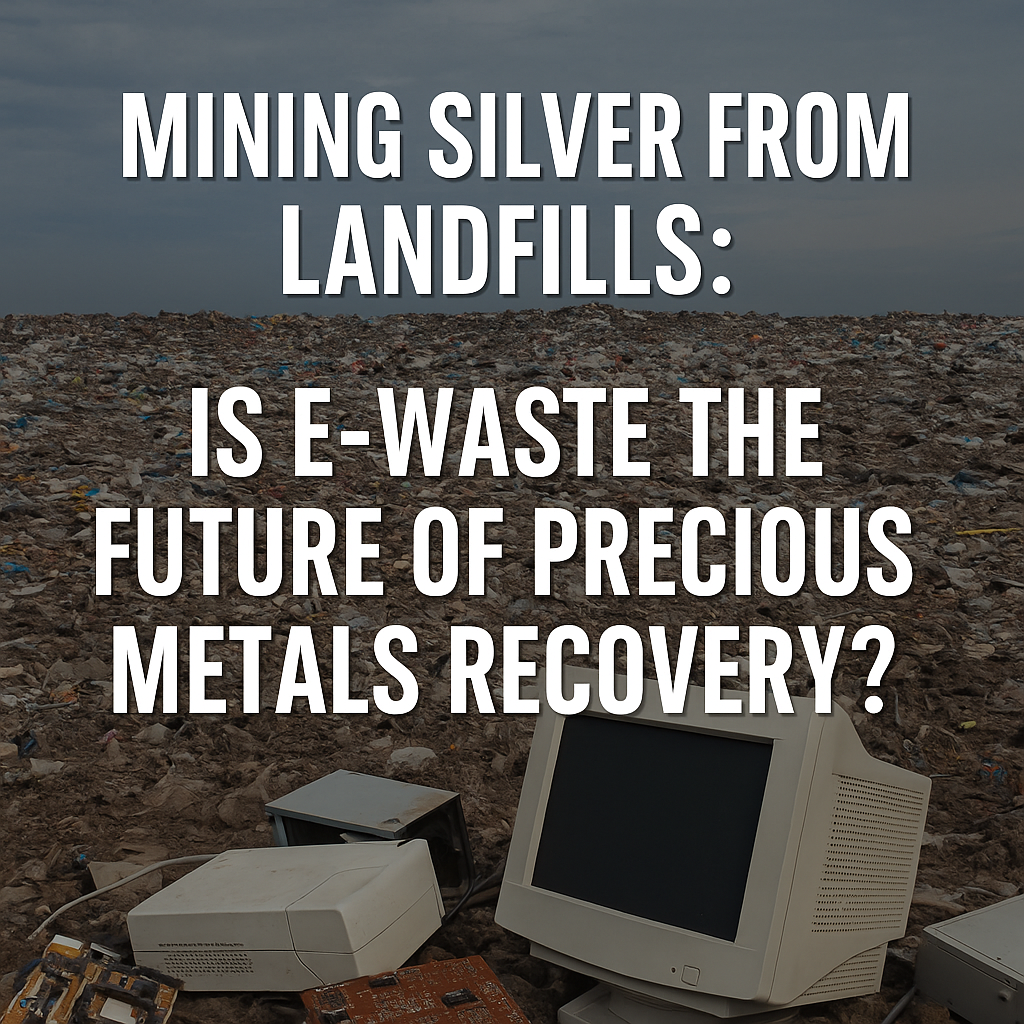
In the minds of most silver investors, the pathway to profit lies in traditional mining—deep shafts, high-powered drills, and ounces of silver extracted from the Earth. But what if the next major silver vein wasn’t underground, but under our trash?
That’s the emerging reality as scientists, recyclers, and investors begin turning their eyes toward a massive, overlooked source of silver: electronic waste, or e-waste. Contained in everything from smartphones and laptops to solar panels and household appliances, e-waste is becoming known as “the urban mine.” And with silver prices sensitive to both industrial demand and supply constraints, the question isn’t whether this trend matters—but how much it could reshape the precious metals landscape.
A Growing Mountain of Opportunity
Global e-waste generation has exploded. According to the United Nations, the world produced over 62 million metric tons of e-waste in 2022, with projections exceeding 75 million by 2030. That’s roughly 8 kilograms of e-waste for every person on the planet—most of which ends up in landfills or incinerators, not recycling centers.
This trash isn’t just a burden—it’s a potential bullion vault. Many common electronics contain trace amounts of silver, often used in:
- Circuit boards and contact points
- Solders and switches
- Display coatings and membranes
- Solar photovoltaic cells
Silver is prized in electronics for its unmatched conductivity and corrosion resistance, making it ideal for high-performance components. And while each device may only contain a fraction of a gram, the sheer volume of discarded electronics adds up quickly.
How Much Silver Are We Throwing Away?
Estimates vary, but high-grade e-waste—such as circuit boards from cell phones and computers—can contain between 300 and 400 grams of silver per metric ton. To put that in perspective, some traditional silver ores contain only 50 to 100 grams per ton. In other words, certain e-waste streams can be 3 to 8 times richer than natural silver ore.
Unfortunately, less than 20% of global e-waste is formally recycled. Much of it is incinerated, landfilled, or exported to developing countries with poor environmental oversight. That means millions of ounces of silver are lost each year, effectively buried in trash heaps around the world.
Urban Mining vs. Traditional Mining
“Urban mining” refers to the process of extracting valuable metals from discarded products and infrastructure. Compared to traditional mining, it offers several potential advantages:
1. Environmental Impact
E-waste recycling can dramatically reduce the environmental toll of mining—no open pits, no displaced ecosystems, and less water contamination. It also avoids the CO₂ emissions associated with ore transport and refining.
2. Technological Innovation
New methods such as bioleaching (using microbes to extract metals) and robotic sorting systems are making recovery more cost-effective and scalable. Companies are also exploring low-chemical, high-yield extraction techniques that can isolate silver and other precious metals from complex waste streams.
3. Geopolitical Diversification
Traditional silver mines are concentrated in a handful of countries, including Mexico, Peru, and China. Urban mining could allow countries to tap into their own “trash reserves,” reducing dependence on foreign mining operations.
But It’s Not That Simple
Despite the promise, scaling e-waste silver recovery is not without its challenges.
1. Cost of Recovery
Silver in e-waste is often spread out in thin layers or mixed with other metals. This makes extraction labor-intensive and chemically complicated, especially compared to recovering bulk metals like copper or aluminum. Many recyclers focus only on high-value items or components that are easy to separate.
2. Infrastructure Gaps
Most countries lack the infrastructure to collect, sort, and process e-waste efficiently. Even in developed nations, consumer awareness and incentives for proper disposal are weak.
3. Regulation and Waste Policies
Recycling e-waste often involves navigating a maze of local, national, and international regulations. For instance, the Basel Convention restricts the export of e-waste, which can make global-scale operations complicated or legally risky.
4. Technical Limits
While technology is improving, no universally efficient system exists to recover all valuable metals from every device. Often, silver is lost in mixed metals, sold off as bulk scrap, or diluted beyond recovery.
Why This Matters to Silver Investors
Silver is unique in that it straddles two major markets: precious metals investment and industrial utility. Demand is rising from both ends, but supply is struggling to keep up.
Rising Demand
Silver demand hit a record 1.2 billion ounces in 2023, driven by:
- Solar panels (silver is a key component of photovoltaic cells)
- Electric vehicles (used in wiring and batteries)
- 5G infrastructure and AI hardware
- Investment-grade bullion and coins
At the same time, global mined silver production has remained mostly flat over the past decade. Scrap recovery—traditionally about 15–20% of supply—has also declined steadily, especially as fewer silver coins and utensils enter the market.
If urban mining fails to scale quickly, this could result in intensifying supply shortages, especially during demand surges.
Price Implications
With tight supply and high industrial need, silver prices could face upward pressure—even before inflation, currency risk, or geopolitical concerns are factored in. Any breakthrough in e-waste recovery tech could spark investment interest—and potentially, M&A activity in the recycling sector. In other words, urban mining is not a silver bullet, but it could influence silver’s pricing dynamics.
If you’re a physical silver investor, the rise of e-waste recovery should reinforce your long-term thesis, not replace it.
Silver extracted from landfills still faces:
- Long lead times
- High processing costs
- Regulatory hurdles
- Volatile recovery rates
Meanwhile, physical silver is finite, portable, and instantly liquid, especially in the form of coins, bars, and rounds. If supply shocks hit—or if recovery fails to meet expectations—physical silver holders will be among the best positioned.
And as urban mining becomes more mainstream, it may raise awareness of silver’s value, both as an industrial asset and a store of wealth.
Final Thought: Trash Today, Treasure Tomorrow
The idea that our old electronics might one day be more valuable than the metal they were made with used to sound absurd. Today, it’s a serious conversation among recyclers, investors, and even central planners.
Landfills may not replace traditional silver mines, but they may help buffer global shortages—if the technology, infrastructure, and incentives align.
For now, the safest silver is the kind you can see, touch, and store. But keep an eye on the landfill—because the future of precious metals recovery might just start there.
Article prompted by Neil Andrew Lemons. Learn more about the history of precious metals, including the historic gold price, silver price, and platinum price, at GoldAndSilverMint.com.