
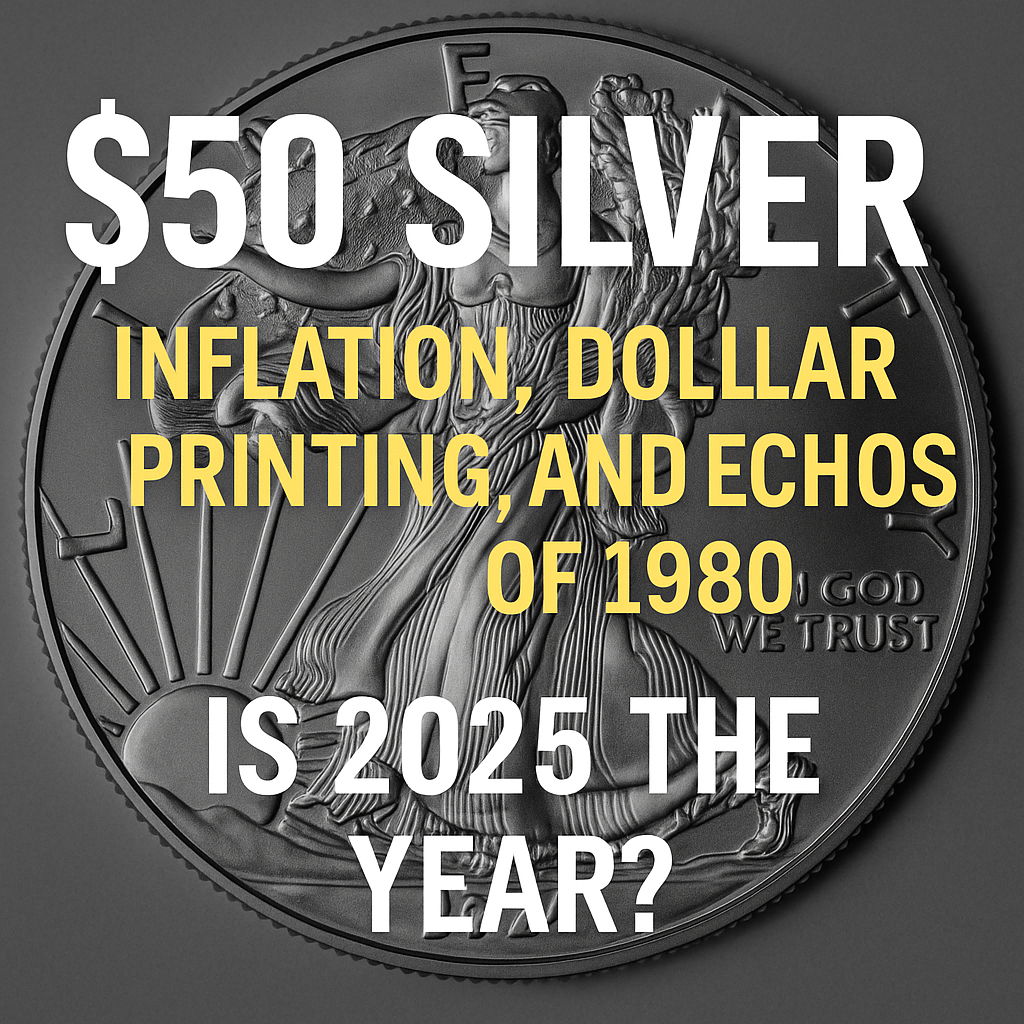
The $50 Silver Scenario: Inflation, Dollar Printing, and Echoes of 1980
Posted on 07/28/2025
by Neil Andrew Lemons
Could silver break $50 per ounce in 2025? While that number may sound ambitious, it’s not unprecedented. Silver has touched that level twice before, each time during periods of extreme economic stress, inflation, and currency debasement. Today’s conditions are beginning to echo those moments in history.
When Has Silver Hit $50 Before?
On January 18, 1980, silver hit $49.45. Silver’s first run at $50 came at the peak of 1970s stagflation. Inflation was soaring, reaching 13.5% annually. The Federal Reserve had expanded the money supply to fund persistent deficits, weakening the dollar’s purchasing power. As trust in fiat money declined, investors rushed into precious metals.
Adding fuel to the fire, the Hunt brothers—Texas oil heirs—attempted to corner the silver market. They accumulated more than 100 million ounces, driving prices from around $6 to nearly $50 in less than a year. The Fed intervened by hiking interest rates to 20%, and COMEX raised margin requirements, which crushed the rally.
On April 28, 2011, silver hit $49.76. The second surge came in the wake of the 2008 financial crisis. The Federal Reserve launched multiple rounds of Quantitative Easing (QE), injecting trillions into the economy. Investors feared long-term inflation and a devalued dollar.
Physical silver demand spiked. Online forums and silver stacker communities gained momentum, warning that “paper silver” markets were suppressing the true price. Despite widespread enthusiasm, silver couldn’t sustain the $50 level and corrected sharply.
Why Silver Could Hit $50 Again in 2025
1. Persistent Inflation
While headline inflation has cooled, core expenses—housing, insurance, and food—continue to rise. Many Americans feel poorer year over year, and trust in official CPI numbers is weakening.
2. Monetary Expansion
Since 2020, the Fed has added more than $5 trillion to its balance sheet. Debt monetization, deficit spending, and discussion of central bank digital currencies suggest the dollar is being stretched thin.
3. Gold/Silver Ratio Disparity
Historically, the gold/silver ratio averages between 15:1 and 40:1. Today, it hovers near 80:1. If the ratio merely reverts to 40:1 with gold at $2,400, silver would trade at $60.
4. Physical Supply Constraints
Bullion dealers report thinning inventories and rising premiums. U.S. Mint production remains below demand. If buying accelerates, the physical silver market could break away from paper pricing.
5. Global De-Dollarization and Uncertainty
Nations are diversifying reserves away from U.S. dollars. Central banks are stockpiling gold. Silver may follow as a secondary monetary metal, especially if geopolitical instability spreads.
What Happens If Silver Hits $50?
A breakout to $50 could trigger a new wave of investor demand, media attention, and political scrutiny. It would likely lead to:
- A surge in silver ETFs and mining stocks
- Shortages of physical bullion
- A revaluation of silver’s monetary and industrial role
- Questions about the sustainability of the U.S. dollar
Conclusion
Silver doesn’t touch $50 casually. In 1980, it happened during a collapse in fiat trust and runaway inflation. In 2011, it reflected fear of central bank overreach. Now, in 2025, the pressure is building again.
If the past is any guide, silver’s next major move could be swift, sharp, and irreversible. This may be the final warning shot before silver reclaims its historical place—not just as an industrial metal, but as real money.
Article prompted by Neil Andrew Lemons. Learn more about the history of precious metals, including the historic gold price, silver price, and platinum price, at GoldAndSilverMint.com.